

Drip Irrigation 1-2-3
Why Drip Irrigation Works
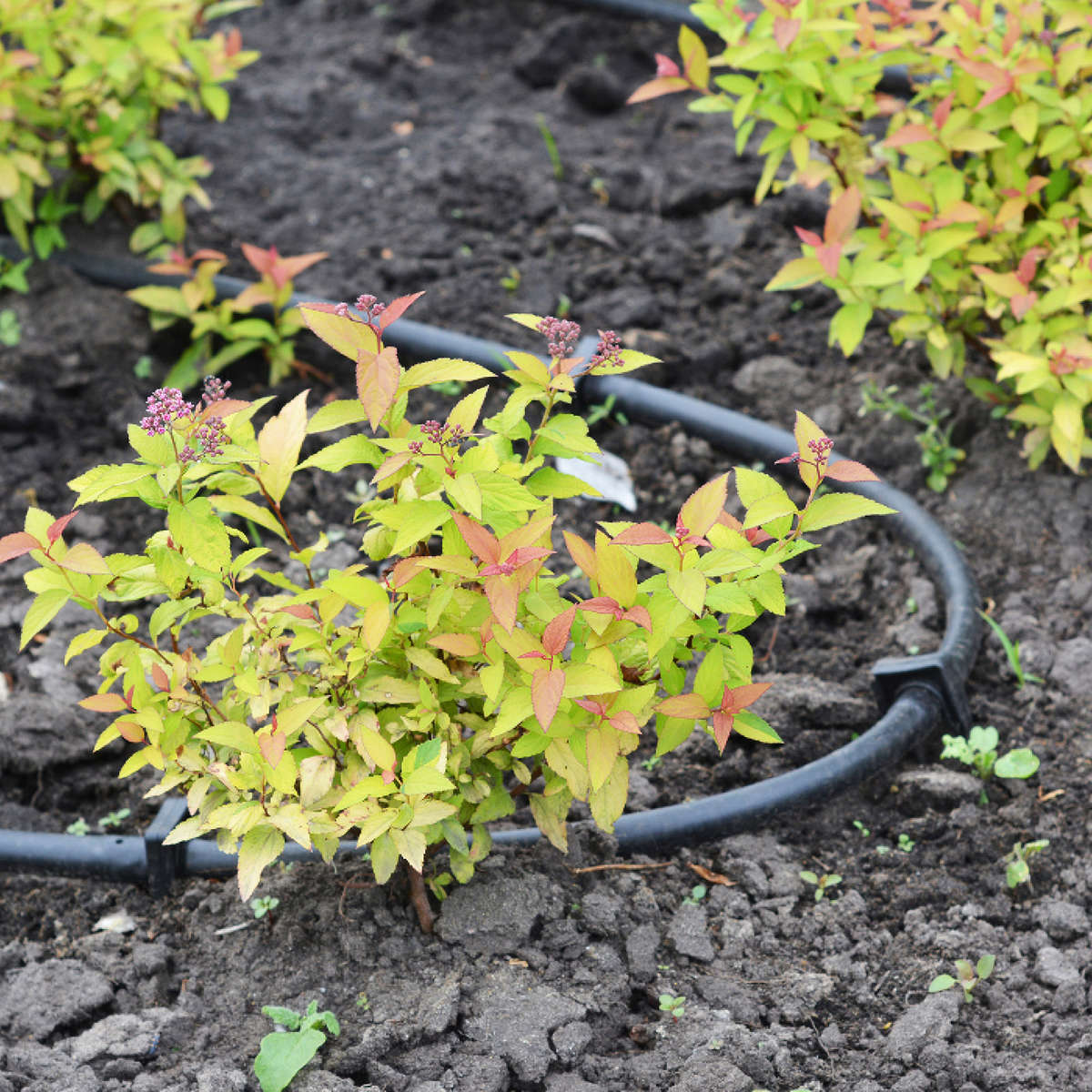
Drip irrigation is one of the most efficient ways to water plants—and this is especially true with heavy clay soils that are prevalent in the Sacramento region. Clay can’t absorb large amounts of water quickly, so overhead watering often leads to runoff, wasted water, and moisture that never reaches the root zone. Drip irrigation solves this by delivering water slowly and steadily, giving the soil time to absorb it, allowing plant roots to take it up efficiently.
Because drip lines apply water directly at the root system, plants develop deeper, stronger roots while the surrounding soil stays dry. That means fewer weeds, healthier plants, and less competition for nutrients.
Drip systems also reduce evaporation, overspray, and runoff, helping conserve water, while lowering utility costs. With targeted watering and minimal waste, drip irrigation saves time, saves resources, and supports a healthier, more resilient garden.
The Basic Pieces of a Drip Irrigation System
Drip irrigation may look complicated when you first see all the fittings and tubing, but the truth is—you only need a few simple parts to get started. Once you know what each piece does, it all clicks into place.
Here are the core components:
- Pressure Regulator: Ensures the water pressure is low enough for drip lines to work properly. Too much pressure can result in blown fittings. A small regulator fixes that instantly.
- Filter: Keeps sediment out of the system so emitters don’t clog—especially important with our mineral-heavy water.
- Mainline Tubing (½" or similar): This is the “highway” that carries water from your faucet or valve to the planting areas.
- Emitter Tubing or Individual Emitters: These deliver the slow, steady drips right at the root zone. Emitter tubing has drip holes built in; individual emitters can be plugged into the mainline exactly where you want them.
- Fittings (tees, elbows, end caps): These connect everything together and allow you to shape the system around beds and plants. They simply push in, no glue required.
- Goof Plugs: Little plugs used to fix mistakes or close holes. (Everyone makes a few!)
- Stakes & Hold-Down Clips: Keeps tubing in place so it doesn’t wander.
With just these few pieces, you can build a complete, efficient drip system. And because everything is modular and push‑to‑fit, there’s no need to feel intimidated—drip irrigation is far easier than it looks!
Shop our full line of professional grade irrigation parts in stores. Our experienced Inside Sales staff can assist you in setting up the most efficient drip system for your landscape.
Shop our full line of professional grade irrigation parts in stores. Our experienced Inside Sales staff can assist you in setting up the most efficient drip system for your landscape.